
Renovations can expose a roof to damage from falling materials, foot traffic, dust, moisture, and temporary openings. In Springville, NY, where projects may take place during changing weather and across older as well as newer housing, roof protection should be planned before work begins rather than treated as cleanup afterward.
Which renovation activities can damage a roof?
Roof damage is not limited to major additions. Everyday remodeling work can create problems when workers, tools, or materials come in contact with roofing surfaces.
Common risk-producing activities include:
- Replacing siding, windows, gutters, or chimney components
- Installing skylights, vents, solar equipment, or antennas
- Building an addition or dormer
- Replacing attic insulation or ventilation components
- Removing or installing roofing near a work area
- Moving ladders, lumber, scaffolding, or debris across the roof
- Using pressure, heat, adhesives, or cutting tools near roofing materials
Even a roof that appears sturdy can be vulnerable. Asphalt shingles can lose protective granules when repeatedly walked on, flashing can bend under pressure, and older sealants may crack when disturbed. A small puncture or lifted shingle may not cause an interior leak immediately, but water can enter during the next heavy rain or freeze-thaw cycle.
What should be checked before renovation work starts?
A pre-renovation roof inspection creates a useful record of existing conditions. It also helps distinguish old damage from damage caused during the project.
Before work begins, check for:
- Missing, curled, cracked, or loose shingles
- Soft areas or sagging sheathing
- Damaged flashing around chimneys, vents, skylights, and roof edges
- Blocked or poorly draining gutters
- Exposed fasteners or old roof penetrations
- Moss, debris, or branches that could conceal defects
- Water stains in the attic or on ceilings
Photographs are helpful, especially around areas close to the renovation. Record the condition of shingles, flashing, gutters, siding-to-roof intersections, and attic spaces. If the roof already has a leak, that problem should be addressed or clearly documented before construction materials are delivered.
A roof that is near the end of its service life may require additional planning. Renovating around a weakened roof can increase the chance of leaks, especially if temporary coverings remain in place during wet or windy weather.
How can workers protect shingles and roof surfaces?
The safest approach is to keep unnecessary traffic off the roof. Roofing materials are not designed to function as walkways, storage platforms, or workbenches.
Useful precautions include:
- Use designated access points rather than crossing the roof repeatedly.
- Place ladders only where they can be secured without crushing gutters or slipping against fragile roofing.
- Use padded supports where equipment must rest near the roof edge.
- Keep tools, fasteners, and scrap material from sliding across shingles.
- Never drag lumber, metal, siding, or demolition debris over the roof.
- Remove loose nails and sharp debris promptly.
- Avoid storing heavy materials on the roof unless the structure and roofing system are specifically designed for that load.
Walk pads or temporary protection may be appropriate in high-traffic areas, but protection must be installed so it does not trap water, scrape the shingles, or block drainage. Materials should not be fastened through the roof merely to hold a protective covering in place unless the resulting penetrations are part of the planned construction and will be properly sealed.
How should a roof be protected during demolition?
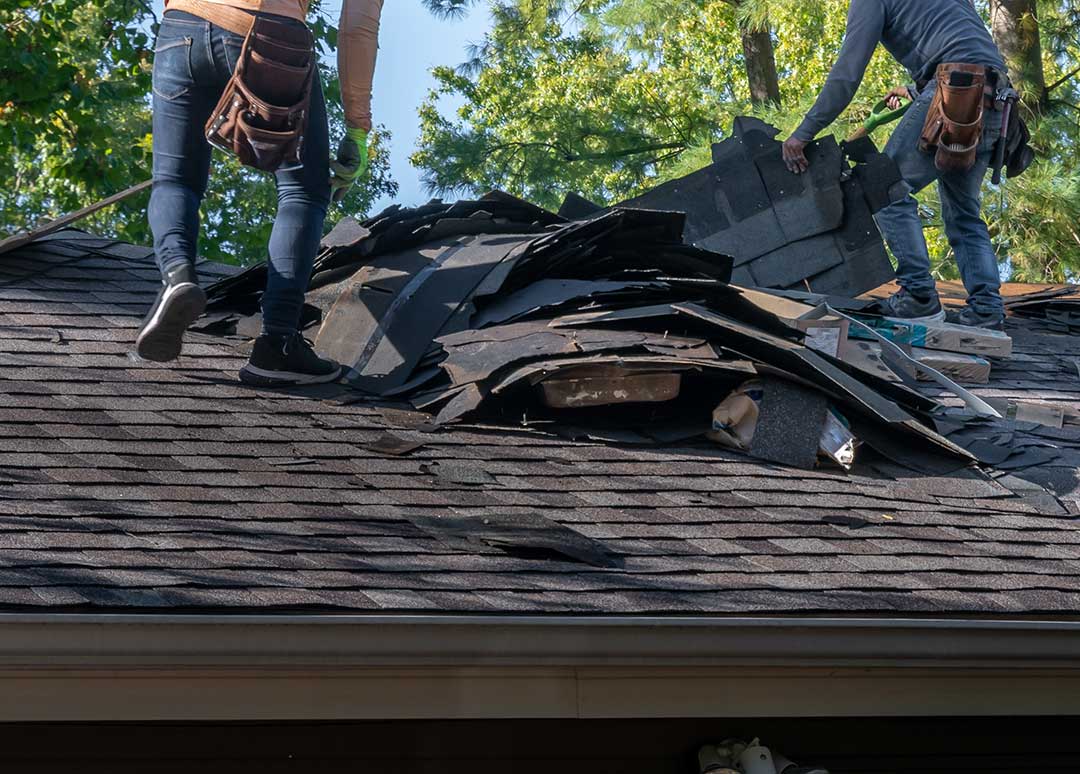
Demolition creates some of the greatest risks because falling materials can strike shingles, puncture membranes, or clog drainage systems. Dust and debris can also hide damage until after the project is complete.
Before demolition, cover vulnerable areas such as roof sections below walls, windows, balconies, or elevated work platforms. Protective coverings should be secured against wind without rubbing continuously against the roofing surface. They should also be arranged so rainwater can drain away rather than collect against a wall or roof penetration.
Do not allow demolition debris to pile up in gutters, valleys, or around downspouts. A blocked drainage path can cause water to back up beneath shingles or overflow onto siding and trim. After each workday, inspect the roofline and ground below for broken roofing pieces, exposed fasteners, or fragments that may have fallen into drainage areas.
What should happen if the roof is temporarily opened?
Any opening in the roof should be treated as a weather-sensitive condition. Temporary protection is not a substitute for completing permanent flashing and waterproofing.
If a renovation requires removing shingles, sheathing, flashing, or a section of roof, the exposed area should be covered with a properly secured temporary system. The covering needs to extend beyond the opening and direct water over, rather than beneath, the surrounding roofing. Edges and corners deserve particular attention because wind can lift loose coverings quickly.
Temporary roof protection should be checked after:
- Heavy rain
- Strong wind
- Freezing rain or wet snow
- Rapid temperature changes
- Any work involving nearby walls, framing, or exterior finishes
In the area’s cold season, snow and ice can add weight to temporary coverings and make roof access hazardous. A wet or icy roof should not be crossed simply to inspect a problem. Ground-level observation, attic checks, and interior monitoring may be safer until conditions improve.
How can renovations prevent leaks around new penetrations?
New vents, skylights, pipes, wiring, and other penetrations require coordinated flashing and sealing. Caulk alone is not a reliable replacement for correctly layered flashing.
The water-shedding design should be considered from the top down. Flashing must work with the roofing material, underlayment, and surrounding wall or curb so water is directed away from the opening. Materials should not be installed in a way that creates a pocket where water, leaves, or ice can collect.
After a penetration is installed, inspect the attic or interior ceiling during the next substantial rainfall. Look for damp insulation, darkened wood, water marks, or drips. Some leaks travel along rafters or sheathing, so the interior stain may appear several feet away from the actual entry point.
What seasonal factors matter in Springville, NY?
Renovation schedules should account for changing moisture, wind, snow, and temperature conditions. Spring and fall can bring wet weather and rapid temperature shifts, while winter work may involve ice, snow loading, and materials that become brittle in cold conditions. Summer heat can soften some roofing surfaces and make certain roof areas more vulnerable to scuffing.
Plan weather-sensitive work around a reliable period of dry conditions when possible. Do not assume that a short-term covering will remain secure through a storm. Wind can lift materials at roof edges, and freeze-thaw movement can enlarge small gaps around flashing or fasteners.
Homes with mature trees should also be checked after storms. Branches and twigs can damage roof coverings or clog gutters during renovation, particularly when temporary protection has altered normal drainage.
How should the roof be checked after renovations?
A final inspection should cover both the roof and the areas below it. Look for new damage rather than only obvious holes.
Check:
- Shingles that are lifted, cracked, bruised, or missing granules
- Bent or displaced flashing
- Punctures from fasteners or temporary supports
- Damaged gutters, downspouts, or drip edges
- Debris in valleys and drainage channels
- New attic moisture or ceiling stains
- Water around newly installed penetrations
Keep renovation records, photographs, and notes about temporary openings or repairs. If a leak appears later, those details can help identify whether the source is related to the roof, wall, window, plumbing, or another part of the renovation.
Roof protection works best when it is treated as part of project planning. Limiting foot traffic, controlling debris, securing temporary coverings, and checking the roof after weather events can prevent a small construction mistake from becoming an interior water problem.
